


By Emily Wolf | Flatwater Free Press

Christon MacTaggart anxiously awaited the $3 million that the state had promised. It couldn’t come fast enough.
Nebraska had already seen more than 15 killings by intimate partners this year when October arrived. During that time, the number of domestic violence survivors seeking help from providers across the state had soared, even as some of those providers had to scale back their services. She knew the state money would go a long way to helping those people.
But it never came.
As October passed, MacTaggart, executive director of the Nebraska Coalition to End Sexual and Domestic Violence, reached out to the state to try to get an answer.
“It has been hard to get a lot of good information,” she said. “No one seems particularly forthcoming with it.”
The problem, according to interviews with lawmakers and a review of budget documents, is that the money was meant to come from the Medicaid Managed Care Excess Profit Fund. And that fund is stretched too thin.
At the start of the 2026 fiscal year, the fund had around $20 million in it — and $24.5 million in projected expenditures, including multiple programs and a $10 million general fund offset. Without clear legislative guidance on which programs to prioritize, the funding decision becomes an administrative one.
“Generally, when available, Excess Profit Fund dollars are used to support Medicaid-related health programs,” DHHS Director of Communications Jeff Powell said in a written statement.
MacTaggart is unsure if they ever will receive the money earmarked for domestic violence services. She’s not alone; multiple other projects and initiatives were slated to receive money from the Medicaid Managed Care Excess Profit Fund. Those include postpartum at-home nurse visits for new mothers and babies; reimbursements to area agencies on aging; and a juvenile justice pilot program.
“There’s a lot of confusion surrounding the fund, and my goal is to make sure we get to the bottom of where that confusion lies and better understand what the future of the Excess Profit Fund looks like,” said State Sen. George Dungan, who has championed several programs supported by the fund.
***
The decision to pull money from the fund appeared to be an easy fix to a thorny problem. Two years ago, lawmakers appropriated $6 million over two years from the Temporary Assistance for Needy Families reserve fund for domestic violence services — only to find out that the federal program’s strict reporting requirements ran afoul of the confidentiality requirements domestic violence service providers must follow.
By the start of the 2025 legislative session, advocates were desperate. They had been unable to tap into any of the $6 million, with dire results: organizations cut shelter capacity and laid off staff, and more cuts were on the horizon.
The state was grappling with financial problems of its own — a fluctuating budget deficit meant general fund dollars were more precious than ever, and senators were forced to get creative to fund their priorities. The Medicaid Managed Care Excess Profit Fund became the funding stream of choice for several initiatives during the 2025 legislative session, in addition to funding existing obligations from past legislative action.
But the excess profit fund is, by its nature, prone to revenue fluctuations. The money comes primarily from excess profits generated by Nebraska’s managed care organizations, Molina Healthcare, Nebraska Total Care and UnitedHealthcare. The fund had total revenue of around $67 million in fiscal year 2023, $32 million in fiscal year 2024 and $22 million in fiscal year 2025. The state initially anticipated some revenue this year, but that changed in late spring.

Powell said DHHS, which oversees the fund, has cautioned lawmakers about funding new initiatives through the fund given its volatility. One of those warnings came from DHHS’ chief financial officer during a February legislative committee hearing, where he warned overutilizing the fund could make it unviable for ongoing programming.
Despite those warnings, lawmakers have continued to use the fund to finance programs, Powell said. “For fiscal year 2026, the fund is over-obligated, so resources are not available to cover all legislative earmarks.”
Sen. Carolyn Bosn, who introduced the amendment earmarking money for domestic violence services, said she immediately reached out to the Governor’s Office for information when she heard that the money hadn’t been released. That’s when she learned there wasn’t enough money in the fund to go around.
“They informed us that the Governor’s office is prioritizing programs that would offset general fund dollars,” she wrote in an email. “We are still working to verify information and see what, if anything, can be done to secure any available funding for these programs.”
***
Sen. Terrell McKinney, whose juvenile justice pilot program is also supposed to be funded through the excess profit fund, said he was made aware of the over-obligation problem during the session. He attributed it, in part, to tapping money from the fund to help the state’s general fund budget crisis.
“The fund never had this issue until we ended up in this budget crisis,” he said.
McKinney said he probably will look to see what other funding sources are available, but it’s his understanding that because of the way his bill was written, DHHS is still obligated to find a way to fund it.
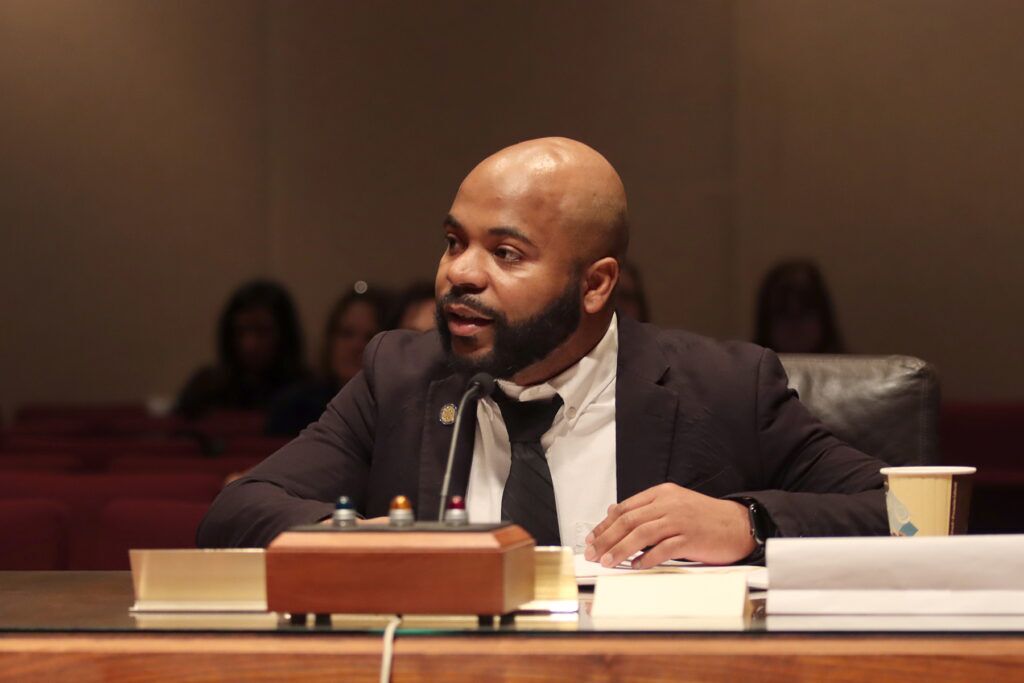
“I’m going to work to find ways to get my pilot program funded, and I think other senators as well are going to try to resolve the issue as much as possible,” he said. “It’s disappointing because we had very heated debates about juveniles and juvenile justice, and my pilot program is meant to try to address the issue by making sure juveniles get resources.”
If the state continues to receive little to no excess profits from the managed care organizations over the next few years, the fund will quickly find itself millions of dollars in the red.
In an updated budget request submitted in October, DHHS requested an additional $4.9 million from the general fund to pay for medical services in 2027 — money that was initially supposed to come from the excess profit fund.
“The excess profit fund is projected to have a shortfall in state fiscal year 2027 and a general fund appropriation is needed to continue these services,” the request notes.
Domestic violence providers across the state will feel the impact of the funding crunch this year. They have seen a 6% increase in the number of survivors served annually. At the same time, inflation continues to rise, MacTaggart said, increasing the cost of providing services. Two providers have had to close satellite offices in the past 18 months, and the majority aren’t fully staffed.
“This funding was fully intended to allow them to maintain their capacity to serve survivors,” she said. “So it will mean that crucial services are cut, and it will also mean that staff will not be able to be rehired. And programs’ ability to fully serve survivors in their area could be impacted.”
In a statement, Powell said DHHS continues to support domestic violence services through stable federal and state funding.
MacTaggart worries that’s not enough. High-profile murder-suicides have captured public attention throughout the year, and by July, the state had surpassed last year’s total number of domestic violence deaths. MacTaggart said providers are seeing a spike in need and an increase in the lethality of cases.
“This money is crucial,” she said, “and so I think that without it, we are going to see more severe cases of domestic violence and potentially more people dying.”