


Sandhills Post review of meetings, financial records and public statements shows debate over Hastings Memorial Library funding has been building since at least February
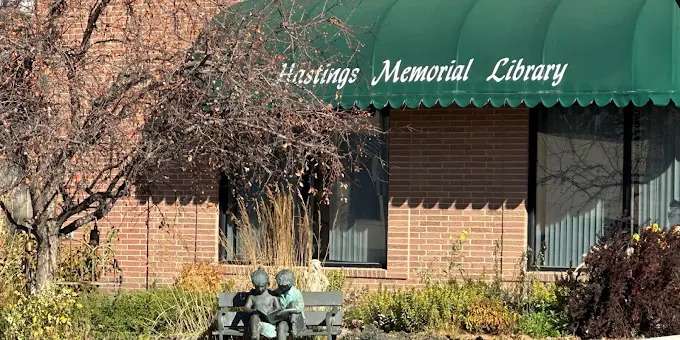
GRANT, Neb. — As Grant City Council members prepare to meet Tuesday evening, discussions surrounding Hastings Memorial Library have become one of the most talked-about issues in the community.
Public support campaigns have emerged online, residents have questioned proposed funding changes, city officials and library trustees have released competing public statements, and concerns have circulated about staffing, board vacancies and the long-term future of library services.
For some residents, the issue appeared to emerge suddenly this spring.
However, a review of city council agendas, meeting transcripts, minutes, financial reports, occupation tax reports, library financial statements, library board agendas and public statements reviewed by Sandhills Post shows discussions regarding Hastings Memorial Library's long-term funding structure have been occurring publicly for several months.
An Annual Report with Little Indication of Controversy
At the Jan. 27, 2026 Grant City Council meeting, Library Director Robin Quinn presented the library's annual report, highlighting programming, circulation, literacy initiatives, accreditation efforts and partnerships within the community.
Quinn reported the library hosted 157 programs during the previous year with more than 1,600 attendees, circulated more than 25,000 physical and digital materials, answered nearly 900 reference questions, recorded approximately 12,500 visits and maintained more than 1,500 active library card holders.
She discussed participation in Dolly Parton's Imagination Library, literacy partnerships with Perkins County Schools, use of library computers, digital resources including access to the New York Times and continuing education efforts undertaken by staff.
Council members accepted the annual report without controversy, and there was little public indication at that meeting that the library's funding model would soon become a topic of significant discussion.
Funding Discussions Surface in February
By late February, however, conversations surrounding the library's financial future had become more focused.
During a Feb. 24 City Council meeting, city officials, library representatives and trustees discussed possible alternatives to the existing funding structure.
Ideas considered included establishing a dedicated property tax levy, pursuing a local sales tax initiative, seeking county participation, increasing fundraising efforts and continuing the use of franchise fee revenues.
The discussion centered largely on sustainability.
City officials expressed concerns about the library's increasing reliance on franchise fee revenues, while library representatives discussed challenges associated with pursuing a sales tax proposal within a limited timeframe and questioned how replacement revenues might be generated.
No final decisions were made during the February discussions, but the meeting marked the beginning of what would become months of conversations regarding how Hastings Memorial Library should be funded moving forward.
April Proposal Changes Direction
The issue moved beyond discussion and into budget planning during the April 14 City Council meeting.
City Superintendent Derek Brueggeman recommended shifting library funding toward Nebraska's statutory library levy authority.
Using Grant's current property valuations, officials estimated the maximum levy could generate approximately $99,943 annually.
At the time, city officials indicated the library had been receiving approximately $148,000 annually through franchise fee transfers, meaning the recommendation represented a reduction of roughly $48,000 from recent funding levels.
City officials indicated the recommendation was based on concerns about the long-term sustainability of franchise fee transfers, comparisons with similarly sized Nebraska communities, uncertainty regarding future state aid and the need to balance municipal resources among multiple departments.
Mayor Lisa Schmitt stated during discussions that council members had previously indicated changes to the library's funding model were likely to occur.
Library Director Robin Quinn told council members that planning for a budget reduction of approximately $40,000 would present challenges and require significant planning.
Council members ultimately approved the proposed funding target.
The decision marked a turning point in the discussion and would later become the focus of public debate.
Franchise Fees Centerpiece
As discussions continued, franchise fee revenues became one of the most debated aspects of library funding.
According to figures later released by the City of Grant, Hastings Memorial Library received approximately $126,963 from franchise fee revenues during fiscal year 2023-2024, approximately $139,798 during fiscal year 2024-2025 and approximately $148,257 during fiscal year 2025-2026.
Occupation tax reports reviewed by Sandhills Post show electric occupation taxes generated relatively stable annual revenues over the last five years, totaling approximately $196,746 in 2021, $193,599 in 2022, $203,654 in 2023, $202,521 in 2024 and $203,338 in 2025.
In a public letter issued in late May, Brueggeman stated the library's share of franchise fee revenues had increased from approximately 60 percent to more than 70 percent over three fiscal years.
The letter argued that directing larger shares of franchise fee revenues toward library operations had coincided with reduced funding levels for departments including streets, parks and recreation, cemetery operations and economic development.
Brueggeman also wrote that the city had encouraged library leadership over several years to consider additional funding options, including fundraising, sales tax proposals, county user fees and foundation support.
He noted that Nebraska law allows libraries to request a levy of up to 10.5 cents per $100 of taxable valuation and stated the proposed levy would provide approximately $99,910 annually for operations.
The city argued the change would create a more transparent and sustainable funding structure while helping protect taxpayers from future increases.
Library Board Offers Different Perspective
The Hastings Memorial Library Board of Trustees later issued its own public statement.
Trustees said the board had already pursued cost-saving measures, utilized grants, participated in consortium memberships and relied on donations and foundation support where possible.
Board members stated they believed they had been given limited time to pursue alternative funding mechanisms after being informed in February that additional increases from the city would not be provided.
Trustees said they considered a sales tax proposal but felt they lacked sufficient time, financial resources and community support to mount a successful campaign.
Board members also said they had requested a property tax levy option, which they stated was later denied.
The board argued the proposed funding level would not fully cover existing wages and insurance expenses for library staff and warned that operating under the proposed budget could eventually affect staffing, operating hours and programming.
Trustees emphasized that donations and grants cannot generally be used to support employee compensation.
Financial records reviewed by Sandhills Post indicate the library had incurred approximately $113,853 in expenditures through May 2026.
Personnel-related expenses, including wages, health insurance, retirement contributions and payroll taxes, represented the majority of spending.
The library's annual budget was approximately $182,567.
County Funding and Additional Options Explored
By May, discussions expanded beyond city funding.
Council agendas reflected consideration of an interlocal agreement involving Perkins County and the City of Grant aimed at supporting library operations beginning July 1.
Council members directed the city attorney to review the proposal and requested recommendations from library representatives.
No final agreement was reached.
June Discussions Expand Beyond Budget
A special joint meeting between the Grant City Council and Hastings Memorial Library Board was held June 8.
Agenda items included library daily operations, library personnel and board roles and responsibilities.
Discussions centered on funding concerns, staffing issues and possible future revenue sources.
Both governing bodies later entered executive session under Nebraska's Open Meetings Act exception allowing discussion for the prevention of needless injury to the reputation of an individual.
The executive session lasted nearly one hour.
No action was taken after returning to open session.
Two days later, a June 10 library board agenda suggested discussions remained ongoing.
Items listed included library funding options, library personnel, board member vacancies and library scheduling matters.
Publicly available records reviewed by Sandhills Post do not indicate whether vacancies currently exist or whether resignations have occurred.
A joint meeting scheduled for June 11 was subsequently canceled.
No explanation accompanied the public notice announcing the cancellation.
What Comes Next
The discussion surrounding Hastings Memorial Library is expected to continue Tuesday evening.
Among the items on the June 23 Grant City Council agenda is consideration of moving the Library Board's next regularly scheduled meeting from July 8 to July 1.
Whether additional information emerges from Tuesday's meeting remains to be seen.
Several questions remain unanswered, including whether library staffing or operating hours may eventually be affected, whether vacancies currently exist on the Library Board, whether Perkins County will participate in future funding arrangements and what topics may ultimately be addressed at a proposed July 1 Library Board meeting.
What public records do show is that discussions surrounding Hastings Memorial Library have not unfolded over the course of a few weeks.
Rather, conversations about how one of Grant's longstanding community institutions should be funded have developed publicly over several months, and additional decisions regarding the library's future may still lie ahead.